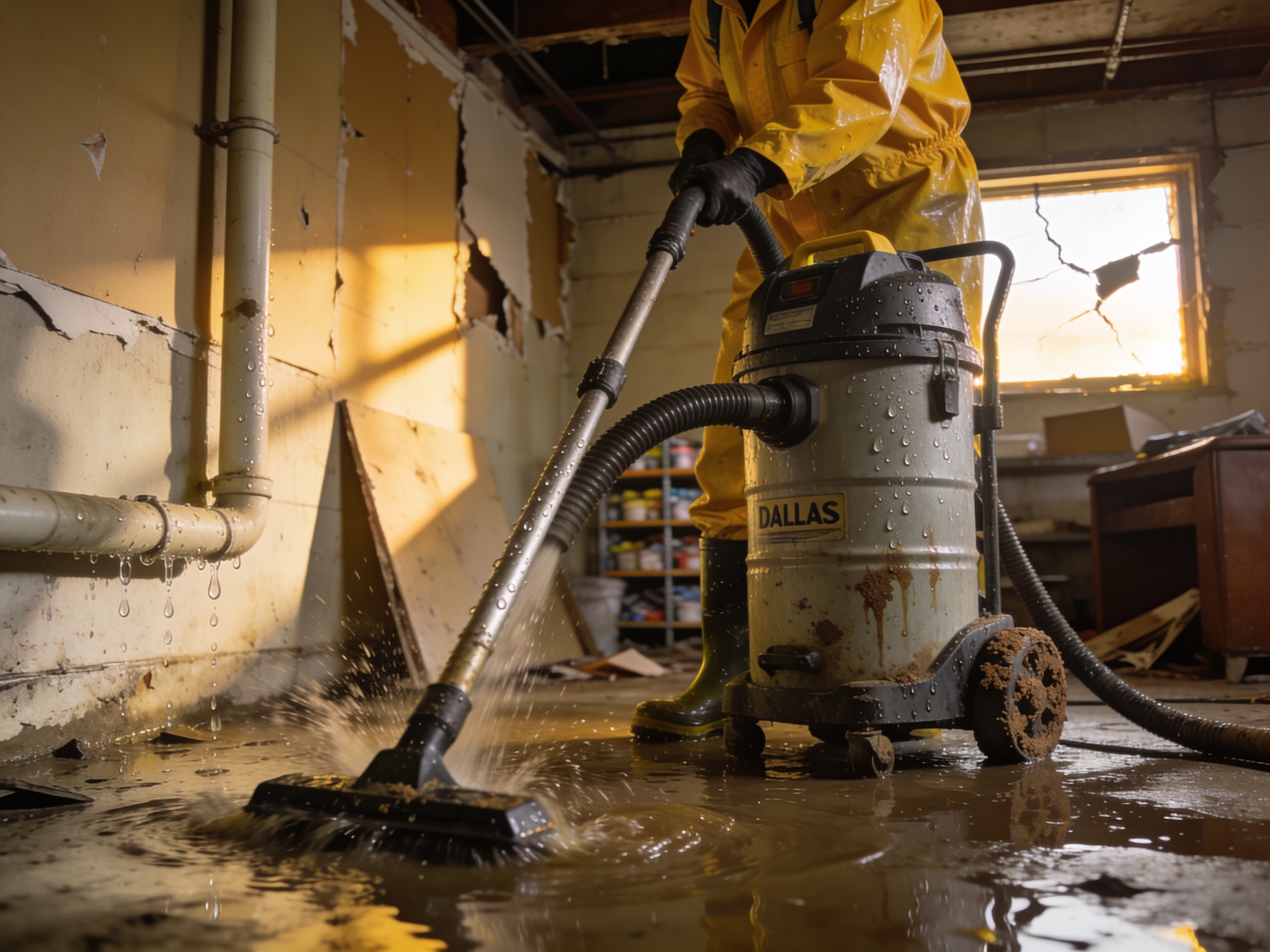
Dallas sits in a humid subtropical climate where summer storms and occasional winter freezes send water into older housing stock fast. Homes built before 1980 in East Dallas and Deep Ellum often have cast-iron drains and slab leaks that let water travel under tile or hardwood before anyone notices. Once moisture hits the crawl space or pier-and-beam floor, it can reach drywall within hours, so extraction must start before humidity drives mold growth above 60 percent.
Reunion Tower and Klyde Warren Park sit on reclaimed land where storm drains back up during heavy rain, pushing water into basements along Main Street and Elm Street. Technicians carry submersible pumps rated for 50 gallons per minute and moisture meters that read through brick veneer common in Uptown and Oak Lawn townhomes. Removing water from these tight cavities without cutting joists keeps the job from turning into a full structural repair.
North Dallas and Lake Highlands properties sit on clay soils that expand and crack foundations during wet cycles. When a supply line bursts, water follows the grade toward the street, pooling against the stem wall. Portable extractors with weighted wands pull standing water from carpet pad without pulling up tack strips, then air movers are placed on the slab to force drying before the next humidity spike arrives.
Bishop Arts District and Lower Greenville commercial spaces often share walls, so water from one unit can migrate into the next through shared plumbing chases. Extraction crews document moisture readings on both sides of the demising wall before they leave so the neighboring business does not discover hidden saturation later.
Technician insight
In Dallas the thing that catches most people out with Emergency Water Removal is how fast humidity in the subtropical climate pushes moisture into the drywall behind baseboards in pre-1980 East Dallas homes. Clay soil around Lake Highlands then holds that moisture against the slab for days, so extraction alone does not finish the job without daily meter checks.
Deep Ellum retail space after overnight pipe burst
Water from a second-floor supply line traveled down a shared chase and pooled under the sales floor. Crews extracted standing water, mapped moisture into the neighboring unit, and set drying equipment that kept both businesses from losing more than one day of sales.
Emergency Water Removal Services We Offer
✓Standing Water Extraction
Removes pooled water from floors and basements using submersible pumps sized for Dallas slab homes and pier-and-beam structures.
✓Carpet and Pad Water Removal
Extracts water from carpet and pad in Uptown and Oak Lawn properties without removing tack strips when saturation is caught early.
✓Crawl Space Water Removal
Drains water from under East Dallas and Deep Ellum homes where clay soil and older plumbing allow moisture to collect beneath the floor.
✓Commercial Flood Extraction
Handles water removal in Bishop Arts District retail spaces and shared-wall buildings along Lower Greenville to limit business interruption.
✓Appliance Leak Extraction
Pulls water from kitchens and laundry rooms after ice maker or washing machine failures common in North Dallas high-rises.
Emergency Water Removal Cost in Dallas, TX
| Service | Typical Range | What Affects It |
|---|---|---|
| Small room extraction and drying | $650–$1,200 | Single room with quick access and no hidden moisture behind cabinets. |
| Multiple room or basement extraction | $1,400–$2,800 | Two or more rooms or pier-and-beam crawl space requiring extra equipment. |
| Commercial shared-wall extraction | $2,200–$4,500 | Retail or office space where moisture crossed into neighboring units. |
Ranges are typical for Dallas, TX and confirmed with an exact written quote before any work starts.
How it works
- 1
Arrival And Safety Check
Technician arrives at the Dallas address, confirms power is off to affected circuits, and locates the source of the water.
- 2
Standing Water Removal
Submersible pumps and weighted wands extract visible water from floors and cavities before it migrates into adjacent rooms.
- 3
Moisture Mapping
Readings are taken on drywall, slab, and subfloor across the property and neighboring units when shared walls exist.
- 4
Initial Drying Setup
Air movers and dehumidifiers are placed based on the moisture map and left running with scheduled follow-up visits.
Pricing
Most Dallas emergency water removal jobs fall into three common size ranges; exact cost depends on access, hidden moisture, and how quickly drying can finish.