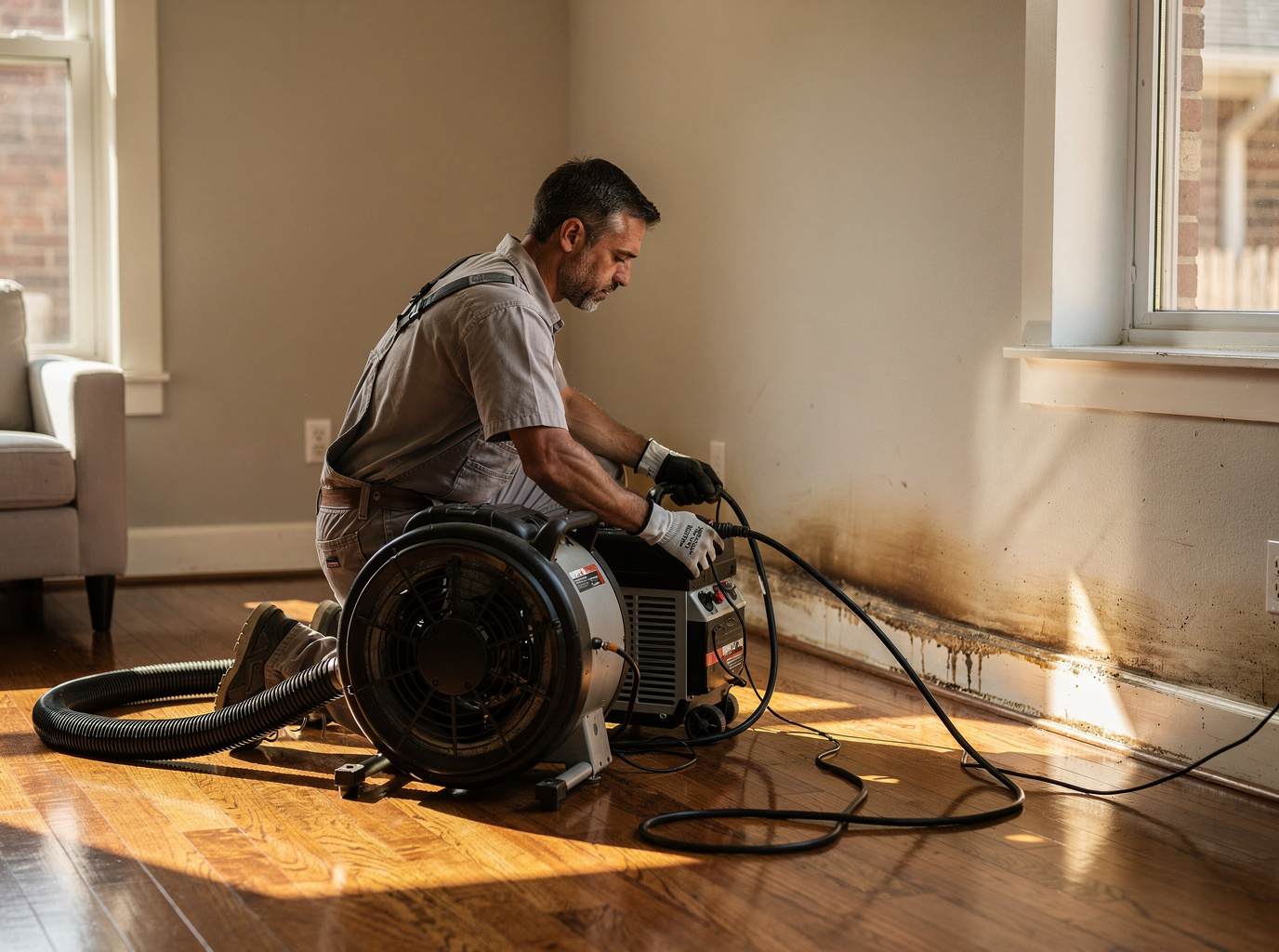
Dallas Water Damage Restoration handles water damage restoration and water damage repair calls throughout Grand Prairie. Crews reach properties along Carrier Parkway and Belt Line Road quickly from the 2201 Main St base. Homes here range from 1960s slab-on-grade builds in Dalworth Park to newer subdivisions near Lake Ridge Park, each with different leak paths after storms.
Hot humid summers speed mold growth once water sits, while mild winters still bring occasional heavy rains that test drainage along Johnson Creek. Technicians extract standing water, dry wall cavities, and treat affected flooring in single-family homes and small commercial spots alike. Service runs Mon–Fri 8am–6pm and Sat 9am–2pm for Grand Prairie residents.
Access via I-20 and SH 360 lets teams move equipment between Grand Prairie jobs and nearby Arlington or Fort Worth without delay. Every extraction plan accounts for the clay-heavy soil that holds moisture longer than sandy lots farther north.
Around 6. Grand Prairie
We regularly work near:
- 📍Lone Star Park
- 📍Turner Park
- 📍EpicWaters Indoor Waterpark
- 📍South Grand Prairie High School
- 📍Lake Ridge Park
- 📍Dalworth Park
Water Damage Restoration in 6. Grand Prairie — Local Notes
- •Many Grand Prairie homes built before 1975 sit on monolithic slabs; water that reaches the edge often travels under the foundation and requires perimeter drying rather than simple carpet extraction.
- •Johnson Creek and its tributaries flood yards east of Carrier Parkway after heavy rain, so restoration crews stage pumps and air movers on higher ground first.
- •Newer two-story homes near EpicWaters have HVAC closets on upper levels that leak into finished spaces below; drying these requires opening both ceiling and wall cavities.
- •Clay soil around Lake Ridge Park retains moisture weeks after a leak, so dehumidifiers stay on site longer than in the sandier lots of North Dallas.