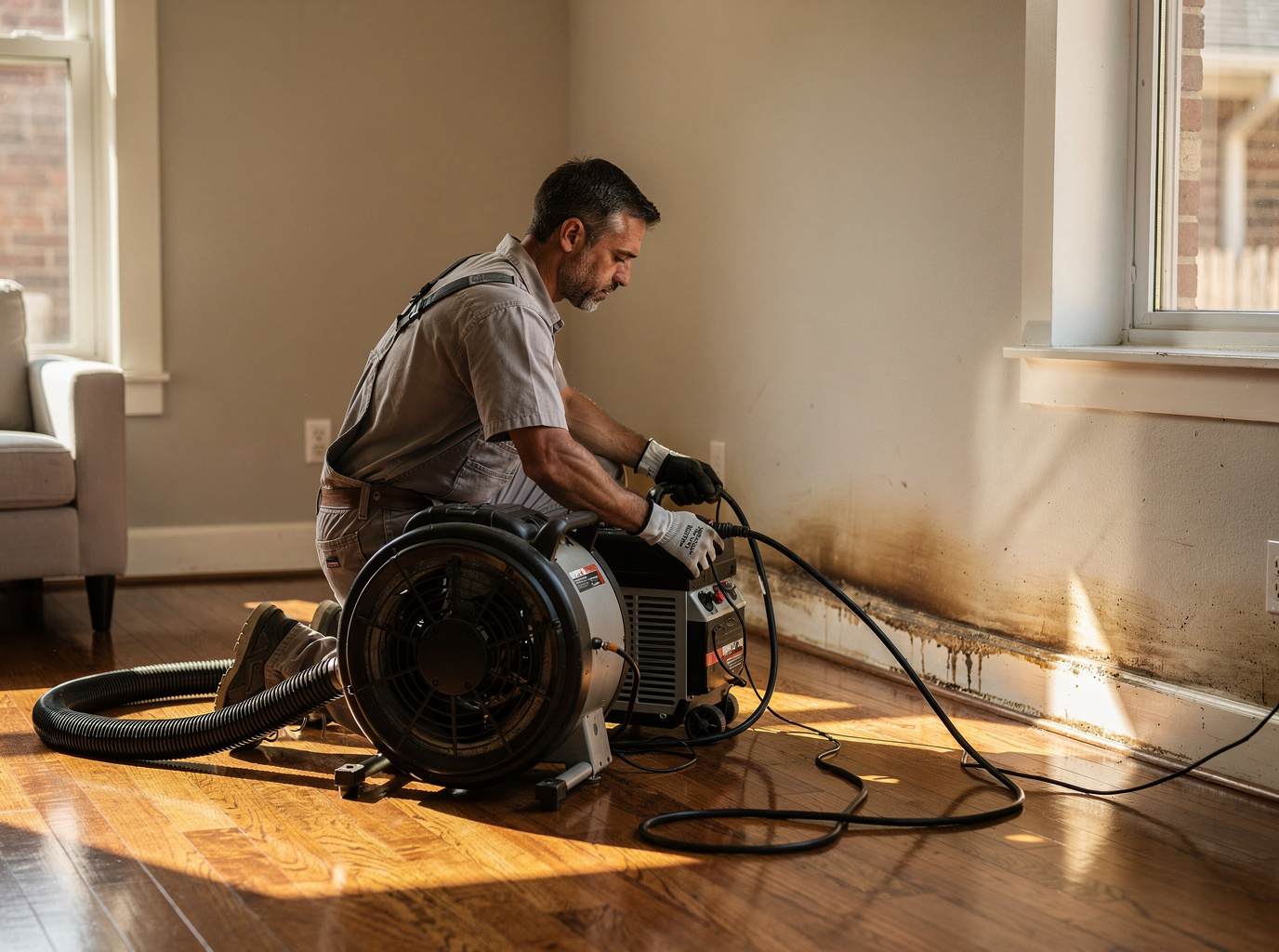
Fort Worth properties along the Trinity River and in the Stockyards Historic District face repeated water intrusion from heavy rains and aging infrastructure. Our crews respond from the Dallas shop to extract water, dry out brick and frame homes, and stop mold growth accelerated by the area's humid subtropical summers. We know the narrow alleys and limited parking around Sundance Square require compact equipment and quick staging.
Older bungalows and two-story homes west of downtown often have crawl spaces that collect runoff from the slight slope toward the river. We map moisture in plaster walls and hardwood floors common to these blocks, then use targeted drying so residents along Main Street or near the Water Gardens can return to normal routines without long displacement.
When storms hit, access via I-30 or 35W can slow arrival, so we stage teams early for neighborhoods like TCU and the Cultural District where basements and slab foundations trap water differently than newer Plano builds.
Around 1. Fort Worth
We regularly work near:
- 📍Sundance Square
- 📍Fort Worth Stockyards
- 📍Fort Worth Water Gardens
- 📍Kimbell Art Museum
- 📍TCU campus
Water Damage Restoration in 1. Fort Worth — Local Notes
- •Historic Stockyards homes built before 1930 often have limestone foundations that wick moisture upward, requiring longer drying times than slab homes.
- •Trinity River flood zones near the Water Gardens create repeat jobs where we must address both surface water and rising groundwater after heavy rains.
- •Narrow streets around Sundance Square limit equipment placement, so we use smaller dehumidifiers and portable extractors on many downtown calls.
- •Hot humid summers speed mold on wet drywall in unvented crawl spaces common in West Fort Worth bungalows.