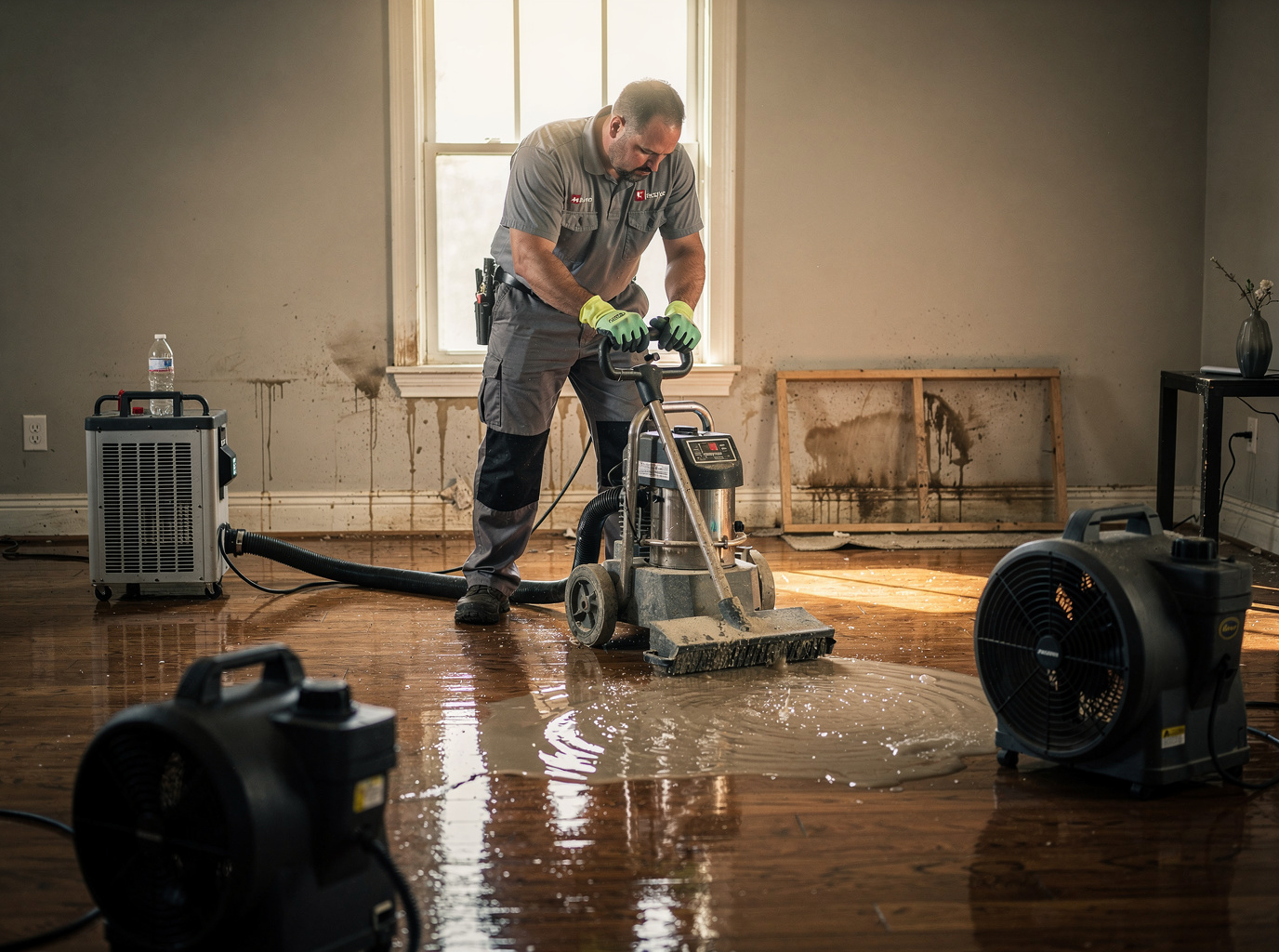
Dallas summers bring high humidity and sudden thunderstorms that overwhelm older clay sewer lines common in East Dallas and Lake Highlands neighborhoods. When water enters through foundation cracks or roof penetrations, it quickly saturates lath-and-plaster walls in pre-1960 homes, requiring targeted removal rather than blanket demolition to avoid unnecessary structural work. Technicians must account for the mild winters that allow hidden moisture to linger in crawl spaces beneath Uptown Dallas brownstones, creating conditions for hidden mold growth if extraction is delayed.
Reunion Tower and Klyde Warren Park sit near high-rise condos where pipe bursts on upper floors travel down multiple levels through concrete slabs. Restoration crews isolate affected units quickly because shared HVAC systems in these buildings can spread moisture and odors to neighboring residences. In Bishop Arts District bungalows with original hardwood floors, water that pools under tongue-and-groove boards demands infrared moisture mapping before any sanding or refinishing begins, or cupping will appear months later.
North Dallas ranch homes built on expansive clay soils shift during heavy rains, opening gaps around window wells and allowing water to enter finished basements. Restoration teams stage dehumidifiers rated for the local subtropical climate because standard units cannot keep indoor humidity below 50 percent during July and August peaks. Work near Dealey Plaza and the Dallas Museum of Art often requires after-hours scheduling to comply with downtown noise ordinances while still meeting the 48-hour drying window needed to prevent secondary damage claims.
Technician insight
In Dallas the thing that catches most people out with Emergency Water Damage Restoration is how fast humidity in the subtropical summers re-wets materials after the initial extraction, especially in the older plaster homes around Deep Ellum and East Dallas where hidden cavities hold moisture for weeks.
Uptown Dallas Condo Pipe Burst
A supply line failed on the fourth floor of a mid-rise near Klyde Warren Park and water traveled down two units. We mapped moisture through three concrete slabs, extracted water from the lowest unit, and ran drying equipment for six days until readings stabilized. The homeowner avoided full drywall replacement in two units.
Emergency Water Damage Restoration Services We Offer
✓Rapid Water Extraction
Removes standing water from flooded rooms in Downtown Dallas high-rises and Oak Lawn townhomes before it migrates into shared walls or lower levels.
✓Structural Drying and Dehumidification
Uses commercial air movers and desiccant dehumidifiers calibrated for Dallas humidity to dry saturated drywall, subfloors and insulation without promoting mold.
✓Ceiling and Wall Cavity Restoration
Opens and dries concealed spaces behind plaster or sheetrock in Deep Ellum lofts and East Dallas bungalows where water travels along joists.
✓Hardwood Floor Water Damage Repair
Extracts moisture from beneath tongue-and-groove floors in Bishop Arts District homes and prevents cupping or buckling common after summer storms.
✓Sewer Backup Cleanup
Handles contaminated water from overwhelmed Dallas County lines that back up into basements in Lake Highlands and North Dallas during heavy rainfall.
Emergency Water Damage Restoration Cost in Dallas, TX
| Service | Typical Range | What Affects It |
|---|---|---|
| Category 1 Clean Water Extraction | $400–$900 | Depends on volume and access in single-family homes versus multi-unit buildings. |
| Category 2 Gray Water Cleanup | $800–$1,800 | Higher when sewage lines or appliances are involved in older East Dallas properties. |
| Full Structural Drying | $1,200–$3,500 | Driven by square footage, number of rooms, and number of days equipment must run. |
| Hardwood Floor Drying | $600–$1,400 | Varies with floor age and whether subfloor removal becomes necessary. |
Ranges are typical for Dallas, TX and confirmed with an exact written quote before any work starts.
How it works
- 1
Emergency Assessment
Arrive on site within hours, document moisture levels with meters, and identify the water source in the affected Dallas neighborhood.
- 2
Water Removal
Extract standing water using truck-mounted pumps and portable extractors suited to the structure type and volume present.
- 3
Drying And Monitoring
Place drying equipment and return daily to check moisture readings until materials reach safe levels for Dallas humidity conditions.
- 4
Sanitization And Restoration
Apply antimicrobial treatments where needed and coordinate repairs to return the property to pre-loss condition.
Pricing
Pricing varies by water category, affected square footage, and drying time required in Dallas humidity.