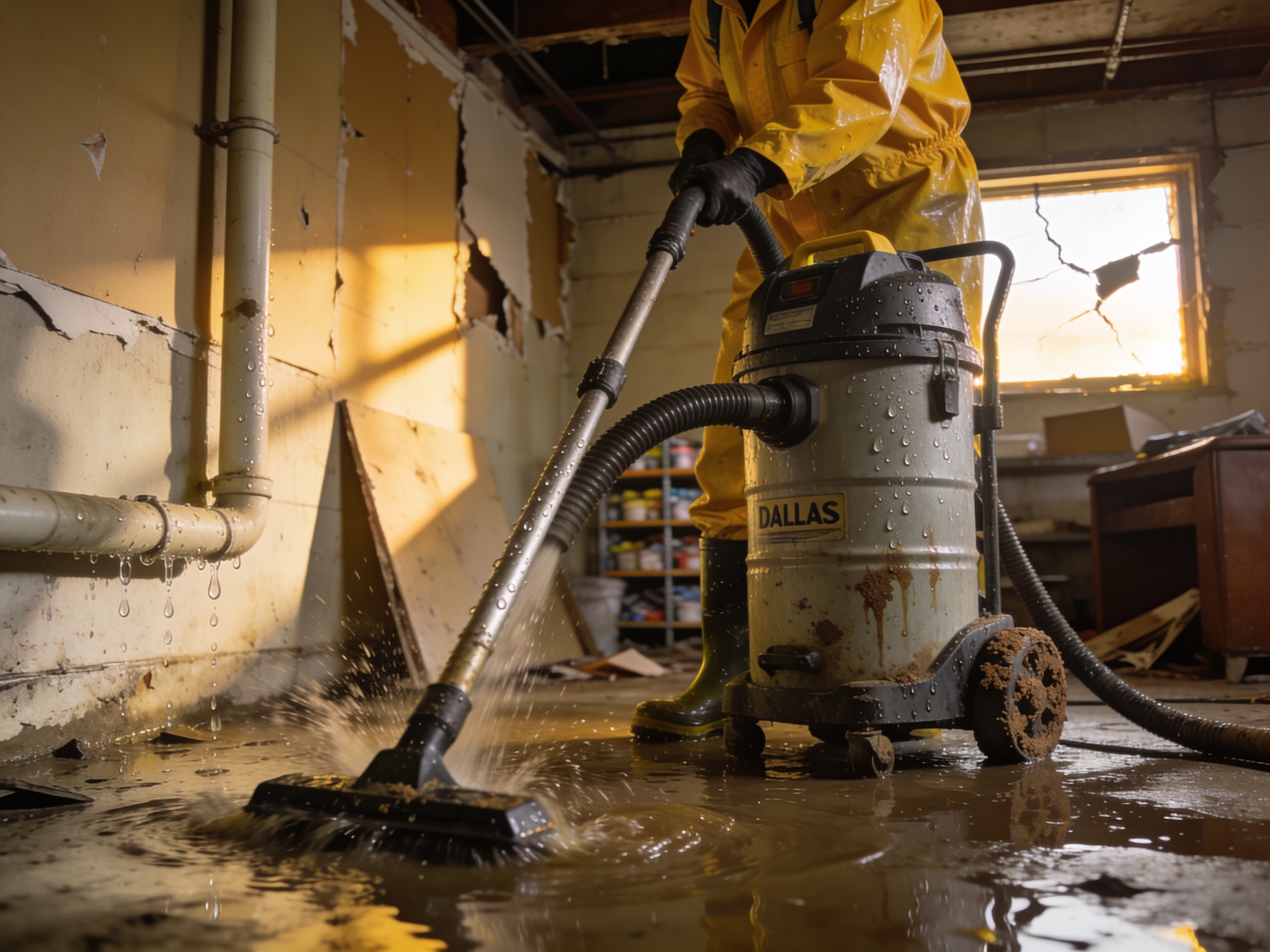
Balch Springs homes built mostly in the 1950s through 1970s sit on concrete slabs that trap water after leaks or heavy rain. Our crews from 2201 Main St reach these neighborhoods via I-635 and focus on pulling moisture from underfloor voids before the humid subtropical summers turn small intrusions into widespread mold. Tight driveways off Hickory Tree Road often require smaller extraction units and careful staging so we do not block resident access.
Flat lots near Elam Creek and local schools like John W. Runyon Elementary see pooling during spring storms because drainage ditches fill fast. We route drying equipment through side yards and monitor humidity levels longer than in newer subdivisions to match the mild winters that let moisture linger. Calls from Balch Springs Road properties usually involve older galvanized lines that fail without warning.
We schedule around the area's typical workday traffic so equipment arrives before evening rush on I-635. Every job starts with on-site moisture mapping rather than assumptions, because lot grades vary block to block in this part of Dallas County.
Around 36. Balch Springs
We regularly work near:
- 📍Hickory Tree Road
- 📍Balch Springs Recreation Center
- 📍John W. Runyon Elementary School
- 📍Balch Springs Public Library
- 📍Balch Springs Road
Water Damage Restoration in 36. Balch Springs — Local Notes
- •Mid-century slab homes along Hickory Tree Road hide pipe leaks until water reaches carpet edges, requiring infrared scans before removal.
- •Summer humidity accelerates mold on particleboard subfloors common in 1960s ranch houses, so we run dehumidifiers 24 hours longer than in drier counties.
- •Narrow driveways near Balch Springs Recreation Center limit truck size, so we stage air movers and moisture meters on foot to avoid damaging lawns.
- •Overflow from nearby ditches during heavy rain pushes water against rear foundations; we place perimeter barriers first to protect adjacent properties.